



Definition
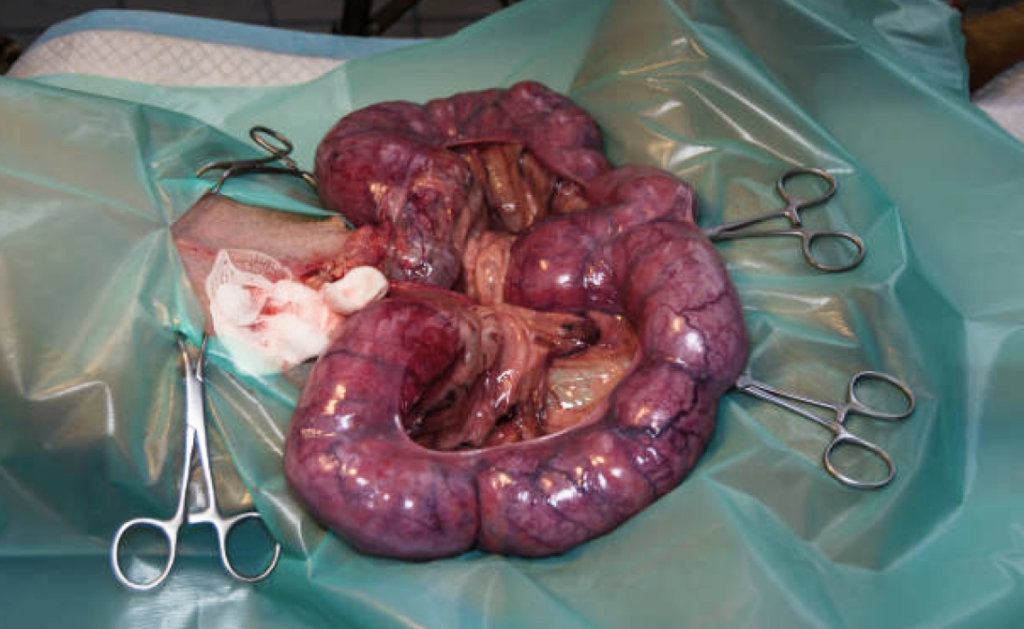
Pyometra is a serious, life-threatening infection that occurs when the uterus fills with pus due to endometritis (endometrium inflammation), metritis (myometrium inflammation), and cystic endometrial hyperplasia (CEH) that occur in response to estrogen-induced endogenous luteal ovarian progesterone or exogenous progesterone, and a secondary bacterial infection (purulent endometritis), causing systemic changes.
Introduction
Pyometra is driven by hormonal shifts and frequently involves the gram-negative bacteria, E. coli.
It typically occurs during estrus (when the intact female dog is in heat), at which time the cervix is open and relaxed.
The cervix is closed most of the time, but during estrus, the cervix opens up and relaxes in order to allow sperm to enter the uterus. During this time, bacteria can more easily travel from the vagina and enter the uterus. This is the reason pyometra often manifests one to two months post-heat, during diestrus.
During diestrus, elevated progesterone levels cause the uterine lining to thicken. Over several cycles, this can lead to CEH, where cysts form and secrete fluids that encourage bacterial proliferation.
As the uterus accumulates bacteria and pus, harmful toxins can enter the bloodstream, resulting in a critical condition.
Incidence
CEH-pyometra complex is the most common uterine disorder of intact female dogs. The incidence in intact female dogs by the time they reach 10 years of age is 3 to 66% (average 19 to 25%).
Signalment
Affected dogs range from 6 months to 18 years of age, averaging 8 to 9.36 years of age. Most present within 8 weeks of their last estrus. Nulliparous bitches are more common than multiparous and primiparous bitches.
Etiology
Causes include hormonal influences/imbalances (most common and influential), having an open cervix (postpartum bacterial infiltration post-breeding), structural changes (retained fetal/placental tissues, obstetrical manipulations, and infectious abortions), dietary (intestinal colonization by E. coli strains), genetic influences (Golden Retrievers and the ABCC4 gene), aberrant immune responses, and metabolic dysregulation (lipid metabolism, oxidative stress).
Hormonal Influences or Imbalances
The canine reproductive cycle involves prolonged phases of hormonal activity, making the endometrial tissue vulnerable to degenerative changes. Estrus promotes uterine cell growth, endometrial vascularization, and uterine sensitivity/response to progesterone. Hormonal imbalances or an abnormal response to the normal concentration of estrogen/progesterone alters uterine epithelial cells, facilitating bacterial adherence, colonization, and growth. CEH-pyometra usually occurs in the early or first half of the diestrus phase (15% incidence). However, pregnancy and the luteal phase itself may be involved.
Pathophysiology
Increased progesterone concentrations causes endometrial growth, glandular proliferation, glandular secretions (mucoid, serous, or bloody fluid accumulates leading to fluid-filled cysts), cervical closure, neutrophil phagocytosis, chemotaxis inhibition, and bacterial adherence. The effects of progesterone include endometrial proliferation, increased endometrial glandular secretion (allowing bacterial growth), cervix closure (inhibiting drainage), myometrial contraction inhibition (inhibiting drainage), and a decrease in mononuclear cellular response (modulating T-cell action and suppressing the local cellular immune response). Progesterone causes disruption of the endometrial epithelium, exposing the uterus to bacteria and bacterial products, increasing the infection risk. Defective bacterial clearance occurs due to an abnormal uterine response to these ovarian hormones. Infection and secondary septicemia/endotoxemia occurs.
CEH-Pyometra Complex Types
Pyometra may be associated with acute or chronic polycystic disease, and acute or chronic endometritis. CEH and pyometra can occur independent of each other or CEH may lead to pyometra.
Type I: CEH, a thickening of the tissue, thin-walled/translucent cysts
Type II: Progesterone accumulation causes cervical relaxation/patency
Type III: Plasma cells accumulation, acute inflammation and clinical signs
Type IV: Chronic endometritis with an open or closed cervix
A: Open cervix, large uterus (up to 3 cm in diameter) with endometrial fibrous changes, hypertrophy, cysts
B: Closed cervix, large uterus, thin-walled/atrophic cysts
Sepsis and Systemic Inflammatory Response Syndrome
Early detection and treatment of sepsis and systemic inflammatory response syndrome (SIRS) is essential, but accurate diagnosis is challenging due to its complexity and lack of specific biomarkers. Inflammatory mediators are induced in response to endotoxin (lipopolysaccharide/LPS) released by Gram-negative bacteria during their growth or death.
Septic Secondary Peritonitis
Septic peritonitis (8.6 to 10.2%) can occur due to perforation of the infected or gravid uterus (58%, from pregnancy, trauma, spontaneously, or iatrogenic), transmural uterine wall spread, and bacterial passage from the uterine lumen via the uterine tube (due to myometrial contractions towards the ovarian bursa, subsequently into the peritoneal cavity).
Closed- versus Open-Cervix Pyometra
Closed-cervix pyometra (23 to 35% incidence) lacks purulent vaginal discharge.
Open-cervix pyometra (40 to 73.3%) exhibits vaginal discharge.
Vaginal discharge varies as the cervix will alternate between opening and closing.
Moderate or severe depression is seen in 30% with open- and 56% with closed-cervix pyometra. Leukocytosis, neutrophilia, monocytosis, and a moderately to severely depressed general condition occurs more with closed versus open. Sepsis is more common in closed (77%) versus open (51%). Postoperative hospitalization length does not differ.
Clinical Signs
Note that the presentation of clinical signs are affected by whether the cervix remains open or closes.
Clinical signs include: none (66 to 70% incidence, enlarged uterus incidentally detected during checkups), vaginal discharge (50 to 85%), vomiting or anorexia (75%), vomiting alone (21.1 to 27%), depression (36 to 98%), non-ambulation (88%), obtundation or lateral recumbency (62%), anorexia alone (10 to 69%), polyuria-polydipsia (20 to 70%), lethargy (20 to 70%), lameness (16.4%), and diarrhea (14 to 15.4%).
Two to three clinical signs are in 60% of cases.
The duration of clinical signs before diagnosis ranges from 0 to 45 days with most being 15 days, typically within several weeks of their last estrus.
Physical Examination Findings
Abnormalities include: abdominal pain (22.7 to 75% incidence), cystitis (70%), enlarged uterus on abdominal palpation (18.8%), dehydration (26.4 to 50%), SIRS (57 to 74%), febrile (20 to 42%), hypothermia (4%), hyperemic mucous membranes (8 to 16.3%), any combination of tachypnea, tachycardia, or pallor (20 to 30%), and pallor alone (16.3%).
On clinical examination, pyometra was diagnosed in 64.5%, while 57.5% had open- and 42.5% had closed-cervix pyometra.
Biochemistry Profile
- Hypoalbuminemia; 81% of cases with hyperglobulinemia (acute phase reaction), and hyperproteinemia
- Hyperbilirubinemia, hypercholesterolemia, elevated alkaline phosphatase (37%), elevated aspartate aminotransferase, elevated lactate dehydrogenase, elevated bile acids (23.3%), elevated alanine aminotransferase
- Hyperglycemia (3.8%), hypoglycemia (4.5%)
- Acidemia, respiratory alkalosis
- Elevated blood urea nitrogen concentration (6.5%), increased creatinine (4.8%), azotemia (6 to 30%)
- Glomerular damage (75% have proteinuria), decreased glomerular filtration rate (GFR), elevated urinary gamma-glutamyl transpeptidase, elevated N-acetyl-β-D-glucosamine; the latter two are seen in 25% of dogs. The decreased GFR results in azotemia, due to immune complex deposition, and renal tubule changes. Acute kidney injury is from systemic infection (57% due to hypoperfusion, 22% due to inflammation)
- Decreased urine specific gravity; 75% have proteinuria (decreased renal function from E.coli-induced endotoxin interacting with the distal convoluted tubules or collecting ducts resulting in inhibition of the anti-diuretic hormone response); renal alterations resolve months post-operatively
Complete Blood Count (CBC)
- Inflammatory leukogram (leukocytosis, 37 to 54.3% of cases), regenerative left shift,
neutrophilia (55.3%), and monocytosis (50.7%) - Leukopenia (3.6% incidence), neutropenia (3.7%), either neutrophilia or neutropenia (58%),
monocytopenia (3.3%), and lymphopenia - Toxic neutrophils; 9.4%
- Band neutrophils; 3 to 83%
- Normocytic, normochromic anemia (59.7%), thrombocytopenia (40%)
Plain Abdominal Radiography
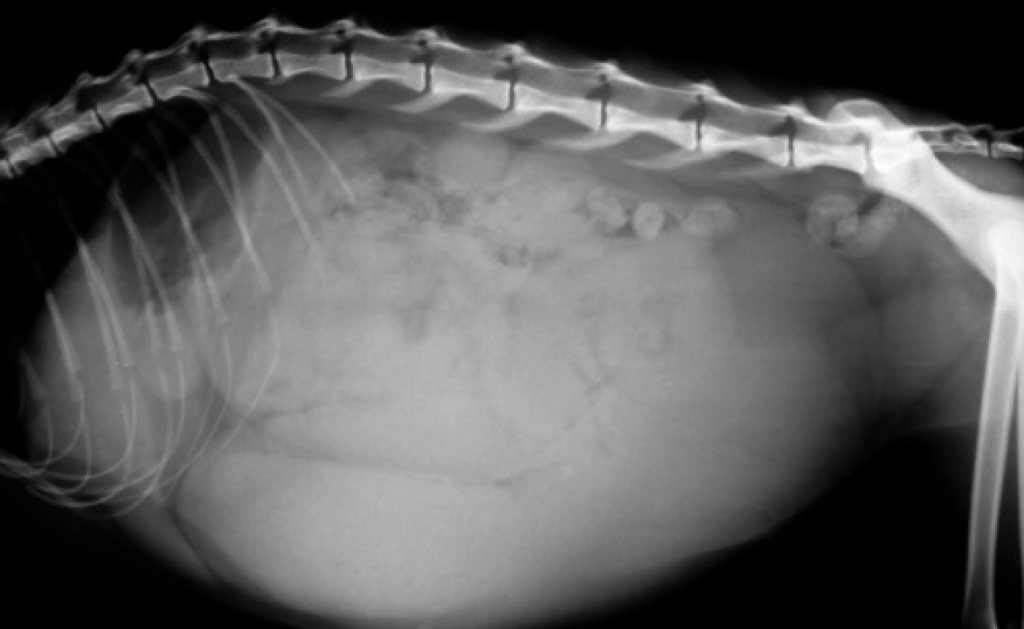
Images may show: enlarged uterus (low specificity/sensitivity), homogenous tubular structure of
fluid density in the caudal abdomen, retained feti, and gas-filled tubular structures in the right
and left caudal abdomen (emphysematous pyometra).
Abdominal Ultrasonography (AUS)
- Uterine fluid; purulent (38%), mucous (19%), and serous (42.9%)
- Abnormal uterine wall thickness
- Uterine cystic changes
- Increased uterine luminal diameter; 29 mm
- Hyperechoic feti
- Endometrial gland hyperplasia; 1 to 2 anechoic uterine areas
- Emphysematous pyometra
Cardiac Diagnostics
- At least one arrhythmia; 79.4%
- Sinus tachycardia; 56.4%
- Ventricular premature complexes; 23%
- Increased amplitude of T wave; 17.9%
- ST depression; 10.2%
- Second-degree atrioventricular block; 5.1%
- Increase of QT interval; 5.1%
- Sinus bradycardia; 5.1%
- First-degree atrioventricular block; 2.5%
- Low wave amplitude; 43.5%
Uterine Biopsy
Histopathological uteri examination show 17% have CEH, 50% moderate CEH-pyometra, and 33% severe CEH-pyometra.
Urine Culture/Sensitivity Testing
A concurrent urinary tract infection (UTI) is diagnosed in 5.6 % to over 70% of cases. The subclinical UTI incidence is 25%. During pyometra surgery, bacterial growth was detected in 87% of uterine specimens and concurrent bacteriuria in 33% of cases. E. coli is the most common isolate (50 to 100% incidence) in uterine (48 to 71%) and urine (20 to 81%) specimens.
A single species of bacteria is seen in 91.5% of cases, more than one species in 8.5%, two species in 60%, three species in 10%, and polybacterial infections in 30%. E.coli is always one of the species involved in polybacterial infections. Negative bacterial cultures are seen in 9 to 10% of cases.
Antimicrobial Susceptibility and Resistance
E. coli can exhibit resistance: piperacillin, amoxicillin-clavulanic acid, cefazolin, ceftazidime, cefepime, meropenem, amikacin, sulfamethoxazole-trimethoprim, lincomycin and cefotaxime.
Resistance to cephalosporins or ampicillin is in less than 10% and to enrofloxacin in 3% of cases.
Of E. coli strains, 72.1% exhibit resistance to third-generation cephalosporins and/or fluoroquinolones, and 24.6% are extended-spectrum ß-lactamase-producers.
Susceptibility may be seen to aztreonam, minocycline, levofloxacin, and amikacin.
Treatment may include doxycycline and orbifloxacin.
Uterine and vaginal content found that 49.4% isolates were resistant to one or more drugs; Gram-positive bacteria resistance (87.5%) is more common than Gram-negative (32.7%).
Treatment
The treatment of choice for pyometra is (emergency) surgery.
Medical treatment can be considered if the patient is not ill, vaginal drainage is occurring, the bitch has a high breeding value, for those in poor condition (due to age, anesthetic risks, co-morbidities, etc), those owners with financial limitations, and to improve patient status pre-operatively.
Medical treatment is not indicated for those who are pyretic, hypothermic, have peritonitis, closed cervix, and with ovarian cysts/other concurrent intra-abdominal disease.
Medical treatment aims to decrease progesterone and increase uterine evacuation (ecbolics) via progesterone receptor antagonist therapy (aglepristone, mifepristone), prostaglandin F2α therapy (dinoprost, cloprostenol), gonadotropin-releasing hormone antagonist therapy (acyline), dopamine agonist therapy (cabergoline), or a combination. Antimicrobials are always used in conjunction.
Regardless, surgical intervention remains the treatment of choice.
Surgical Treatment
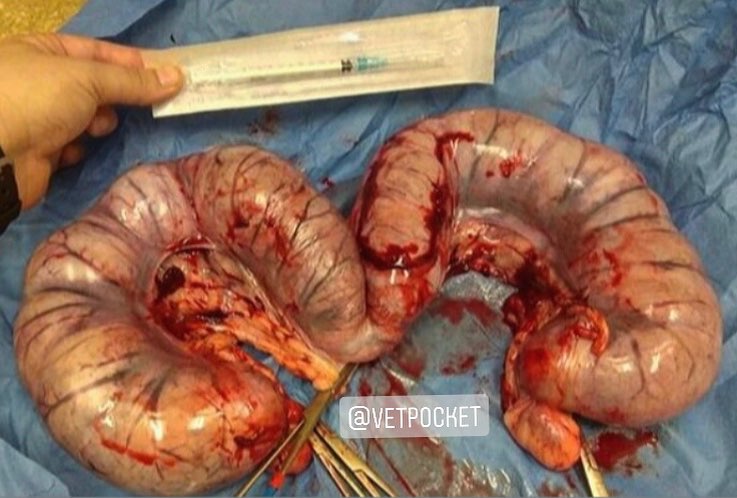
The open ventral midline celiotomy is most often recommended and implemented. Preoperative considerations Iatrogenic septic abdomen risk decreases with preoperative/intraoperative cystocentesis, avoidance of abdominal/urinary bladder palpation, and immediate surgery. Retrograde urinary catheter placement can be considered to improve surgical visualization.
Surgical Complications
Overall ovariohysterectomy complication incidence is 7.5 to 20%, increasing with those over 2 years of age, prolonged surgical time, and larger body weight. Complication odds increase by a factor of 1.03 for every one kilogram of weight increase. Complication odds increase by 2% for each additional anesthesia minute. Some complications include:
- Ovarian remnant syndrome/stump pyometra
- Respiratory; 16.3%
- Hemorrhage; 3%, seen with those over 25 kg in weight and is the primary cause of death
- Peritonitis
- Incisional; 5 to 9%
- Ureteral damage
- Pancreatitis; 0.5%
- Granuloma; less than 30% of uterine/ovarian pedicles with braided nonabsorbable suture
- Fistula tract; ligature reaction, braided nonabsorbable or surgical gut suture
- Urinary sphincter mechanism incontinence; 11 to 20%
- Intestinal/urethral obstruction
- Persistent polyuria-polydipsia/proteinuria; 12%
Post-operative pyometra surgical complication incidence is 14 to 25%, associated with prolonged hospitalization in 10% of those cases that develop complications. Such complications include:
- Sepsis/septic shock
- Disseminated bacterial infection
- Acute arterial thrombosis
- Hemorrhage
- Peritonitis; 12.5 to 13%
- UTI; 5.3 to 6%
- Wound infection; 2.2 to 3%
- Uveitis; 1.7 to 2%
- Cardiac arrhythmia; 1 to 1.4%
- Persistent polyuria-polydipsia; 0.3%
- Hepatic disease/ascites; 0.3%
- Renal malfunction; 0.3%, E. coli in 8% of cases
- Death; 1 to 17% incidence overall (0 to 27% in dogs), 5% within 3 years
General Outcome
Surgery is considered curative. Euthanasia mortality is 10 to 12.5%, uterine rupture mortality is 50% and peritonitis mortality is 3 to 12%. Clinics estimated that of the animals presented, 76% were BAR or QAR, 20% were depressed or non-ambulatory, and 4% were obtunded and lateral; estimated survival for these groups were 98%, 74 to 80%, and 31 to 38%, respectively.
Prognosticators
Overall 65% of dogs survive to discharge. The rate of survival to discharge is 97%; 44% stay in the hospital 2 nights or more, and 3% had a ruptured uterus. Prolonged hospitalization is associated with 19% morbidity.
- High blood urea nitrogen (BUN) concentration; greater odds of death post-operatively
- Heart murmur; greater odds of death post-operatively
- Uterine rupture, inappetence, high concentrations of BUN or serum creatinine, low packed
cell volume or dehydration; greater odds of hospitalization 2 or more nights - Hypoalbuminemia; negative prognosticator for sepsis survival
- SIRS, pancreatic abscessation, septic abdomen; survival decreases
- Prolonged hospitalization factors; moderate to severe depression (7-fold risk), pallor (3-fold risk), leukopenia (3.5-fold risk)
- Hyperemic mucous membranes; decreased risk of prolonged hospitalization
- Hyperlactatemia; prolonged hospitalization
- Leukopenia; 18-fold risk of peritonitis, 3.5-fold risk of prolonged hospitalization
- Normal white blood cells; risk of prolonged hospitalization/peritonitis versus leukocytosis
Who Performs the Surgery
Comparing referral hospitals and community clinics, survival to discharge is 97% and does not differ between them. Median duration between diagnosis and ovariohysterectomy is shorter at referral hospitals (0 days) versus community clinics (1 day); delay is not related to survival. Hospitalization duration does not impact survival to discharge or beyond.
Private practices estimate that economic euthanasia is likely for 13% of patients; 80% are reluctant to refer to a high-quality, high-volume spay-neuter clinic because of lack of prompt appointment availability (20%), aftercare (18%), and equipment (14%).
Prevention
Surgical sterilization via ovariohysterectomy/ovariectomy is preventative.
Should signs of estrus or pyometra/stump pyometra occur post-preventative surgery, rule-out ovarian remnant syndrome, ectopic ovarian tissue, exogenous progesterone/estrogen administration, endocrine system neoplasia, or unethical veterinarian behavior.
Financial Expense
The majority (56%) of clients reported sometimes having trouble paying for all recommended
services, and others often (31%) or rarely (13%) have financial trouble.
References
- Andrzej Łobaczewski, et al. Multiple Pseudo-Placentational Endometrial Hyperplasia (PEH)
as a Rare Uterine Disorder in the Bitch Animals (Basel). 2025 Feb 8;15(4):479. PMID:
40002961 PMCID: PMC11851632 DOI: 10.3390/ani15040479. - Maja Arendt, et al. The ABCC4 gene is associated with pyometra in golden retriever dogs. Sci
Rep. 2021 Aug 17;11(1):16647. doi: 10.1038/s41598-021-95936-1. - Rafael Gariglio Clark Xavier, et al. Characterization of Escherichia coli in Dogs with Pyometra and the Influence of Diet on the Intestinal Colonization of Extraintestinal Pathogenic E. coli (ExPEC). Vet Sci. 2022 May 22;9(5):245. doi: 10.3390/vetsci9050245.
- Rafael Gariglio Clark Xavier, et al. Transmission of Escherichia coli Causing Pyometra
between Two Female Dogs. Microorganisms. 2022 Dec 14;10(12):2465. doi: 10.3390/
microorganisms10122465. - Marta Rybska, et al. Canine cystic endometrial hyperplasia and pyometra may downregulate neuropeptide phoenixin and GPR173 receptor expression. Anim Reprod Sci. 2022
Mar;238:106931. doi: 10.1016/j.anireprosci.2022.106931. Epub 2022 Jan 21. - Nicole Norena, et al. Ultrasonographic and Computed Tomographic Diagnosis of Urachal
Diverticulum Concurrent With Pyometra in a Dog. Vet Radiol Ultrasound. 2025
Jan;66(1):e70002. PMID: 39791431 PMCID: PMC11719760 DOI: 10.1111/vru.70002. - A Kumar, et al. Evaluation of uterine antioxidants in bitches suffering from cystic endometrial hyperplasia-pyometra complex. Pol J Vet Sci. 2024 Mar 20;27(1):43-52. PMID: 38511595 DOI:
10.24425/pjvs.2024.149332. - Xin Deng, et al. Expression of AMPK and PLIN2 in the regulation of lipid metabolism and oxidative stress in bitches with open cervix pyometra. BMC Vet Res. 2025 Mar 13;21(1):164. PMID: 40082867 PMCID: PMC11905669 DOI: 10.1186/s12917-025-04622-1.
- Hun-Young Yoon, Jae-Young Byun, Kang-Hyo Park, Byong-Su Min, Jung-Hyun Kim. Sterile Pyometra in Two Dogs. Immune Netw. 2017 Apr;17(2):128-131. doi: 10.4110/in.2017.17.2.128.
Epub 2017 Apr 20. - T S Shyamkumar, et al. Differential Expression of Prostaglandin Receptors in Canine Uterus With Pyometra. Top Companion Anim Med. 2022 Jan-Feb;46:100612. doi: 10.1016/ j.tcam.2021.100612. Epub 2021 Nov 3.
- Gabriele Marino, et al. Pseudo-Placentational Endometrial Hyperplasia in the Bitch: Case
Series. Animals (Basel). 2021 Mar 6;11(3):718. doi: 10.3390/ani11030718. - Clarissa H Santana, et al. Association of Pseudoplacentational Endometrial Hyperplasia and
Pyometra in Dogs. J Comp Pathol. 2020 Oct;180:79-85. doi: 10.1016/j.jcpa.2020.09.002. Epub 2020 Oct 1. - Clarissa Helena Santana, et al. Predisposing Factors for Pseudoplacentational Endometrial Hyperplasia or Cystic Endometrial Hyperplasia in Dogs and Their Association with Pyometra Vet Sci. 2024 Dec 26;12(1):1. PMID: 39852876 PMCID: PMC11768680 DOI: 10.3390/
vetsci12010001. - Gisele Almeida Lima Veiga, et al. Cystic endometrial hyperplasia-pyometra syndrome in bitches: identification of hemodynamic, inflammatory, and cell proliferation changes. Biol Reprod. 2017 Jan 1;96(1):58-69. doi: 10.1095/biolreprod.116.140780.
- Magdalena Woźna-Wysocka, et al. Morphological changes in bitches endometrium affected by cystic endometrial hyperplasia – pyometra complex – the value of histopathological
examination. BMC Vet Res. 2021 Apr 26;17(1):174. doi: 10.1186/s12917-021-02875-0. - Pablo Donati, Leonel A Londoño, Marcela Tunes, Cesar Villalta, Eliana C Guillemi. Retrospective evaluation of the use of quick Sepsis-related Organ Failure Assessment (qSOFA) as predictor of mortality and length of hospitalization in dogs with pyometra (2013-2019): 52 cases. J Vet Emerg Crit Care (San Antonio). 2022 Mar;32(2):223-228. doi: 10.1111/vec.13103. Epub 2022 Feb 15.
- Murat Onur Yazlık, et al. The evaluation of SIRS status with hemato-biochemical indices in
bitches affected from pyometra and the Usefulness of these indices as a potential diagnostic tool. Theriogenology. 2022 Nov;193:120-127. doi: 10.1016/j.theriogenology.2022.09.015. Epub 2022 Sep 15. - Murat Onur Yazlık, et al. Pyometra alters uterine aquaporins related with lipopolysaccharide
concentrations and antioxidant enzyme activities in bitches. Anim Reprod Sci. 2024 Dec:271:107621. doi: 10.1016/j.anireprosci.2024.107621. Epub 2024 Oct 24. - Murat Onur Yazlık, et al. The presence of virulence factor genes downregulates uterine
AQP3 and alters glutathione peroxidase activity and uterine histopathology in canine pyometra. Reprod Domest Anim. 2024 May;59(5):e14615. doi: 10.1111/rda.14615. - Murat Onur Yazlık, et al. Expression patterns and distribution of aquaporin water channels in
cervix as a possible mechanism for cervical patency in bitches affected by pyometra. Theriogenology. 2024 Oct 1:227:138-143. doi: 10.1016/j.theriogenology.2024.07.022. Epub 2024 Jul 25. - Hui-Hua Zheng, et al. Identification of Canine Pyometra-Associated Metabolites Using
Untargeted Metabolomics. Int J Mol Sci. 2022 Nov 16;23(22):14161. doi: 10.3390/
ijms232214161. - Ragnvi Hagman, et al. KC-like chemokine as a biomarker of sepsis in dogs with pyometra.
BMC Vet Res. 2024 Sep 13;20(1):411. PMID: 39272157 PMCID: PMC11395178 DOI: 10.1186/s12917-024-04271-w. - Roman Dąbrowski, et al. Changes in interferon-gamma and neopterin in female dogs
undergoing ovariohysterectomy as elective spay or as treatment of pyometra. Can J Vet Res.
2020 Jul;84(3):230-234. - Hatice Esra Çolakoğlu, Ecenur Karaca. Evaluation of SIRS and qSOFA in the diagnosis of
sepsis in dogs with pyometra. Theriogenology. 2025 Apr 1:241:117420. PMID: 40184938 DOI: 10.1016/j.theriogenology.2025.117420. - Ji-Seon Yoon, DoHyeon Yu, Jinho Park. Changes in the Serum Protein Electrophoresis
Profile in Dogs With Pyometra. Front Vet Sci. 2021 Mar 1;8:626540. doi: 10.3389/
fvets.2021.626540. eCollection 2021. - Hüseyin Özkan, et al. Expression patterns of inflammatory and oxidative stress-related
genes in the uterine and ovarian tissues of dogs diagnosed with pyometra based on cervical patency status. Theriogenology. 2024 Oct 15:228:1-8. PMID: 39068700 DOI: 10.1016/j.theriogenology.2024.07.024. - Josipa Kuleš, et al. The plasma proteome and the acute phase protein response in canine
pyometra. J Proteomics. 2020 Jul 15;223:103817. doi: 10.1016/j.jprot.2020.103817. Epub 2020 May 13. - Nilgün Gültiken, et al. Plasma concentration and uterine and ovarian expressions of insulin-
like growth factor-2 in dogs with cystic endometrial hyperplasia-pyometra. Acta Vet Hung. 2021 Apr 22;69(1):73-79. doi: 10.1556/004.2021.00013. - Marina García-Camacho, et al. Analytical validation of an automated assay to measure
calprotectin (S100A8/A9) in dog saliva and serum and changes in canine leishmaniasis, pyometra and hyperadrenocorticism. BMC Vet Res. 2025 Feb 20;21(1):80. PMID: 39980018
PMCID: PMC11841251 DOI: 10.1186/s12917-024-04443-8. - Supranee Jitpean, Aime Ambrosen, Ulf Emanuelson, Ragnvi Hagman. Closed cervix is associated with more severe illness in dogs with pyometra. BMC Vet Res. 2017 Jan 5;13(1):11. doi: 10.1186/s12917-016-0924-0.
- I Kurban, et al. Evaluation of calcium, phosphorus and some biochemical parameters in dogs with open and closed cervix pyometra. Pol J Vet Sci. 2024 Jun;27(2):241-247. PMID: 39736065 DOI: 10.24425/pjvs.2024.149354.
- Beatriz Gasser, et al. Clinical and ultrasound variables for early diagnosis of septic acute
kidney injury in bitches with pyometra. Sci Rep. 2020 Jun 2;10(1):8994. doi: 10.1038/
s41598-020-65902-4. - Tovah I Dorsey, Elizabeth A Rozanski, Claire R Sharp, Jonathan M Babyak, Armelle M de Laforcade. Evaluation of thromboelastography in bitches with pyometra. J Vet Diagn Invest. 2018 Jan;30(1):165-168. doi: 10.1177/1040638717737349. Epub 2017 Oct 23.
- Anna Palomares, et al. Emphysematous pyometra and emphysematous hepatitis caused by Klebsiella pneumoniae infection in a diabetic dog. Vet Radiol Ultrasound. 2024 May;65(3):203-207. PMID: 38357787 DOI: 10.1111/vru.13340.
- Pablo Rodrigo Batista, et al. Doppler ultrasonographic evaluation of medically treated female dogs with cystic endometrial hyperplasia-pyometra complex. Vet Radiol Ultrasound. 2022 Jul;63(4):490-497. doi: 10.1111/vru.13079. Epub 2022 Mar 13.
- Sol Arioni, et al. Ultrasonographic quantification of the endometrium echogenicity and heterogeneity in canine physiological and pathological conditions using computer-assisted analysis. Anim Reprod Sci. 2024 Nov:270:107597. doi: 10.1016/j.anireprosci.2024.107597. Epub 2024 Sep 10.
- S Arioni, et al. Ultrasonographic computer-assisted quantification of the intraluminal uterine content in female dogs. Theriogenology. 2025 Mar 1:234:208-215. PMID: 39742719 DOI: 10.1016/j.theriogenology.2024.12.021.
- Maryam Mahdipour, Asghar Mogheiseh, Mohammad Saeed Ahrari-Khafi. A descriptive angiographic study of the uterine arteries during pregnancy, the postpartum period and CEH/pyometra in bitches. Reprod Domest Anim. 2021 Apr;56(4):537-544. doi: 10.1111/rda.13891. Epub 2021 Jan 19.
- Soomin Ahn, et al. Comparison of clinical and inflammatory parameters in dogs with pyometra before and after ovariohysterectomy. Can J Vet Res. 2021 Oct;85(4):271-278.
- Dušan Janković, et al. Analysis of the concentrations of some haematological parameters, C-reactive protein and anti-Müllerian hormone in bitches affected by pyometra. Reprod Domest Anim. 2022 Oct;57(10):1156-1164. doi: 10.1111/rda.14186. Epub 2022 Jun 24.
- Laishram Kipjen Singh, et al. Endometrial transcripts of proinflammatory cytokine and enzymes in prostaglandin synthesis are upregulated in the bitches with atrophic pyometra. Vet Immunol Immunopathol. 2018 Nov;205:65-71. doi: 10.1016/j.vetimm.2018.10.010. Epub 2018 Oct 25.
- F Tecles, et al. Evaluation of adenosine deaminase in saliva and serum, and salivary α- amylase, in canine pyometra at diagnosis and after ovariohysterectomy. Vet J. 2018 Jun;236:102-110. doi: 10.1016/j.tvjl.2018.04.018. Epub 2018 May 1.
- Marek Szczubiał, et al. The effect of pyometra on glycosylation of proteins in the uterine tissues from female dogs. Theriogenology. 2019 Jun;131:41-46. doi: 10.1016/ j.theriogenology.2019.03.020. Epub 2019 Mar 25.
- M Szczubiał, R Dąbrowski, M Bochniarz, P Brodzki. Uterine non-enzymatic antioxidant defence mechanisms (glutathione, vitamin C, copper and zinc) in diagnosis of canine pyometra. Pol J Vet Sci. 2019 Sep;22(3):549-555. doi: 10.24425/pjvs.2019.129963.
- Marek Szczubiał, et al. Activity of the glycosidases β-galactosidase, α-l-fucosidase, β-N-acetyl-hexosaminidase, and sialidase in uterine tissues from female dogs in diestrus with and without pyometra. Theriogenology. 2022 Jan 1;177:133-139. doi:10.1016/j.theriogenology.2021.10.020. Epub 2021 Oct 21.
- Victor M Balcão, et al. Isolation and Molecular Characterization of Two Novel Lytic Bacteriophages for the Biocontrol of Escherichia coli in Uterine Infections: In Vitro and Ex Vivo Preliminary Studies in Veterinary Medicine. Pharmaceutics. 2022 Oct 30;14(11):2344. doi: 10.3390/pharmaceutics14112344.
- Tessa E Fiamengo, Erin E Runcan, Christopher Premanandan, Bryan Blawut, Marco A Coutinho da Silva. Evaluation of Biofilm Production by Escherichia coli Isolated From Clinical Cases of Canine Pyometra. Top Companion Anim Med. 2020 Jun;39:100429. doi: 10.1016/j.tcam.2020.100429. Epub 2020 Mar 19.
- Doroteja Huber, et al. Pyometra Associated With Staphylococcus Pseudintermedius in Two Bitches. Top Companion Anim Med. 2022 Jul-Aug;49:100650. doi: 10.1016/j.tcam.2022.100650. Epub 2022 Mar 6.
- Cassiane Elisabete Lopes, et al. Comparative genetic and pathogenic approaches of Escherichia coli isolated simultaneously from pyometra and urine of bitches. Vet Res Commun. 2024 Jun;48(3):1755 1768. PMID: 38546809 DOI: 10.1007/s11259-024-10355-7.
- Anna Ylhäinen, et al. Bacteria associated with canine pyometra and concurrent bacteriuria: A prospective study. Vet Microbiol. 2025 Feb:301:110362. PMID: 39778300 DOI: 10.1016/j.vetmic.2024.110362.
- Camila Azevedo Moni, et al. Escherichia coli isolated from pyometra and cystitis in the same animal exhibit a wide phenotypic similarity. J Appl Microbiol. 2024 May 1;135(5):lxae108. PMID: 38692849 DOI: 10.1093/jambio/lxae108.
- Kazuki Harada, Tadashi Miyamoto, Michiyo Sugiyama, Tetsuo Asai. First report of a blaNDM-5-carrying Escherichia coli sequence type 12 isolated from a dog with pyometra in Japan. J Infect Chemother. 2024 Sep;30(9):938-941. doi: 10.1016/j.jiac.2024.02.013. Epub 2024 Feb 16. PMID: 38369122 DOI: 10.1016/j.jiac.2024.02.013.
- A Bertero, et al. Antimicrobials administration, treatment outcome and bacterial susceptibility in canine pyometra cases subjected to ovariohysterectomy. Vet J. 2024 Aug:306:106157. PMID: 38866074 DOI: 10.1016/j.tvjl.2024.106157.
- Parinya Sroithongkham, et al. Multidrug-resistant Escherichia coli causing canine pyometra and urinary tract infections are genetically related but distinct from those causing prostatic abscesses. Sci Rep. 2024 May 24;14(1):11848. PMID: 38782931 PMCID: PMC11116460 DOI: 10.1038/s41598-024-62028-9.
- Natascha Leitner, et al. Lipid droplet dynamics in healthy and pyometra-affected canine endometrium. BMC Vet Res. 2022 Jun 11;18(1):221. doi: 10.1186/s12917-022-03321-5.
- Barbara M Socha, Piotr Socha, Anna Z Szóstek-Mioduchowska, Tomasz Nowak, Dariusz J Skarżyński. Peroxisome proliferator-activated receptor expression in the canine endometrium with cystic endometrial hyperplasia-pyometra complex. Reprod Domest Anim. 2022 Jul;57(7):771-783. doi: 10.1111/rda.14121. Epub 2022 Apr 8.
- Lourdes Soler, et al. Measurement of ITIH4 and Hp levels in bitches with pyometra using newly developed ELISA methods. Vet Immunol Immunopathol. 2021 May;235:110221. doi: 10.1016/j.vetimm.2021.110221. Epub 2021 Mar 1.
- https://en.wikipedia.org/wiki/Perilipin-2.
- Simona Attard, Roberta Bucci, Salvatore Parrillo, Maria Carmela Pisu. Effectiveness of a Modified Administration Protocol for the Medical Treatment of Feline Pyometra. Vet Sci. 2022 Sep 22;9(10):517. doi: 10.3390/vetsci9100517.
- Thaís Gomes Faustino, et al. In Situ Uterine Artery Prostaglandin E2 and Nitric Oxide in Open-Cervix Pyometra and Medically Treated Bitches. J Vet Pharmacol Ther. 2025 Jan;48(1):22-29. PMID: 39287059 DOI: 10.1111/jvp.13482.
- Emanuelle Bortolotto Degregori, et al. Effects of postoperative hyperbaric oxygen therapy on hematological and biochemical parameters in patients diagnoses with pyometra in sepsis. Top Companion Anim Med. 2025 Jan-Feb:64:100943. doi: 10.1016/j.tcam.2024.100943. Epub 2024 Dec 13.
- Fossum TW. Small Animal Surgery, Mosby Co., (4th Ed), 2012.
- Juliet Frances Anne Pope, Toby Grahame Knowles. Retrospective analysis of the learning curve associated with laparoscopic ovariectomy in dogs and associated perioperative complication rates. Vet Surg. 2014 Aug;43(6):668-77. PMID: 24962374 DOI: 10.1111/j.1532-950X.2014.12216.x.
- Young-Tae Park, Tomomi Minamoto. Optimized Two-Port Laparoscopic-Assisted Ovariohysterectomy for Hydrometra and Pyometra in Small-Sized Dogs. Animals (Basel). 2025 Jan 12;15(2):187. PMID: 39858187 PMCID: PMC11758302 DOI: 10.3390/ani15020187.
- Allyson A Sterman, Kelley Thieman Mankin, Claudia L Barton. Stump Pyometra Secondary to Human Topical Estrogen Hormone Exposure in a Spayed Female Chihuahua. J Am Anim Hosp Assoc. 2019 Nov/Dec;55(6):e55604. doi: 10.5326/JAAHA-MS-6744. Epub 2019 Sep 16.
- Georgia Karnezi, et al. Body Temperature Fluctuation After Ovariohysterectomy in Dogs in Luteal Phase, Inactive Phase and Pyometra: A Clinical Study of 77 Cases. Top Companion Anim Med. 2020 Aug;40:100440. doi: 10.1016/j.tcam.2020.100440. Epub 2020 May 15.
- Mia K Nilsson, et al. Sonographic features of the uncomplicated postoperative abdomen in dogs treated for pyometra by ovariohysterectomy. Vet Radiol Ultrasound. 2023 Nov;64(6):1090-1098. PMID: 37985867 DOI: 10.1111/vru.13310
- Caryn Ehrhardt, et al. Stump pyometra in a spayed female dog secondary to tamoxifen. Vet Med Sci. 2023 Jan;9(1):47-52. doi: 10.1002/vms3.1041. Epub 2022 Dec 26. PMID: 36571806.PMCID: PMC9857122 DOI: 10.1002/vms3.1041.
- L Muraro, R S White. Complications of ovariohysterectomy procedures performed in 1880 dogs. Tierarztl Prax Ausg K Kleintiere Heimtiere. 2014;42(5):297-302. PMID: 25323211.
- Flávia Semighini, et al. Case Report on the Effect of AlpaWash® on the Healing of a Post- surgical Wound in a Female Canine Initially Diagnosed with Pyometra. Int J Pharm Compd. 2024 May-Jun;28(3):260 263. PMID: 38768506.
- Marjorie A Owen, et al. Canine laparoscopic-assisted ovary-sparing hysterectomy does not increase risk of stump pyometra. J Am Vet Med Assoc. 2023 Apr 28;261(8):1166-1173. doi: 10.2460/javma.22.12.0539. Print 2023 Aug 1. PMID: 37116874 DOI: 10.2460/javma.22.12.0539.
- Soyeon Gwak, HyunJung Han. Evaluation of the modified quick sequential organ failure assessment scoring system for triage and prognostic assessment in canine emergency and critically ill patients: a retrospective study. BMC Vet Res2025 Apr 12;21(1):261. PMID: 40221708 PMCID: PMC11992716 DOI: 10.1186/s12917-025-04689-w.
- Branimira Špoljarić, et al. Endometrial Mucinous Adenocarcinoma in a Bitch With Pyometra- A Case Report. Top Companion Anim Med. 2019 Sep;36:16-21. doi: 10.1053/j.tcam.2019.06.002. Epub 2019 Jun 25.
- Álan Gomes Pöppl, et al. Progesterone-Related Diabetes Mellitus in the Bitch: Current Knowledge, the Role of Pyometra, and Relevance in Practice. Animals (Basel). 2024 Mar 14;14(6):890. PMID: 38539988 PMCID: PMC10967455 DOI: 10.3390/ani14060890.
- James Okwee-Acai, et al. Prevalence of common conditions and associated mortalities of dogs treated at the small animal clinic, Makerere University, Kampala, Uganda. BMC Vet Res. 2024 Dec 31;20(1):590. PMID: 39736747 PMCID: PMC11687069 DOI: 10.1186/s12917-024-04432-x.
- Jennifer W C Turner, Ashlee J McCallin, Rachael E Kreisler. Promoting access to care in pyometra treatment: pathways to collaboration between high-quality, high-volume spay-neuter clinics and private practices. J Am Vet Med Assoc. 2024 Mar 29;262(7):909-916. PMID: 38552325 DOI: 10.2460/javma.23.12.0694.
- Özge Turna Yilmaz, et al. Anti-Müllerian hormone as a diagnostic tool for ovarian remnant syndrome in bitches. Vet Res Commun. 2015 Sep;39(3):159-62. PMID: 26099303 DOI: 10.1007/s11259-015-9639-0.
- Z Krauss, M Krauss. Magnetic resonance imaging and laparoscopic management of an ovarian remnant in a bitch. Tierarztl Prax Ausg K Kleintiere Heimtiere. 2015;43(2):111-4. PMID: 25771839 DOI: 10.15654/TPK-140461.
- A-R Günzel-Apel, et al. Clinical signs, diagnostic approach and therapy for the so-called ovarian remnant syndrome in the bitch. Tierarztl Prax Ausg K Kleintiere Heimtiere. 2012;40(1):35-42; quiz 43. PMID: 22331327.
- Matteo Burgio, et al. Unexpected Basal Anti-Müllerian Hormone Concentrations in a 6-Year- Old Bitch Presenting an Ovarian Remnant. Animals (Basel). 2025 Jan 23;15(3):311. doi:10.3390/ani15030311. PMID: 39943081 PMCID: PMC11816129 DOI: 10.3390/ani15030311.
- Kristen Parker, Elisabeth Snead. Atypical presentation of ovarian remnant syndrome in a dog. J Am Anim Hosp Assoc. 2014 Jul-Aug;50(4):e1-5. PMID: 25001170 DOI: 10.5326/JAAHA-MS-6025.
- Cheryl Sangster. Ovarian remnant syndrome in a 5-year-old bitch. Can Vet J. 2005 Jan;46(1):62-4. PMID: 15759831 PMCID: PMC1082859.
- Rebecca L Ball, et al Ovarian remnant syndrome in dogs and cats: 21 cases (2000-2007). J Am Vet Med Assoc. 2010 Mar 1;236(5):548-53. PMID: 20187819 DOI: 10.2460/javma.236.5.548.
- Ulrike Flock, et al. Anti-Müllerian hormone as a diagnostic tool to identify queens with ovarian remnant syndrome. J Feline Med Surg. 2022 Aug;24(8):e168-e174. doi: 10.1177/1098612X221099195. Epub 2022 May 30. PMID: 35635063 PMCID: PMC9315174 DOI: 10.1177/1098612X221099195.
- Ulrike Flock, et al. Anti-Müllerian hormone concentrations in queens throughout the estrous cycle. Domest Anim Endocrinol. 2022 Oct:81:106749. PMID: 35834880 DOI: 10.1016/j.domaniend.2022.106749.
- Ned J Place, Jeri-Lyn Cheraskin, Betty S Hansen. Evaluation of combined assessments of serum anti Müllerian hormone and progesterone concentrations for the diagnosis of ovarian remnant syndrome in dogs. J Am Vet Med Assoc. 2019 May 1;254(9):1067-1072. PMID: 30986154 DOI: 10.2460/javma.254.9.1067.
- Kubra Karakas Alkan, et al. Immunohistochemical and qPCR determination of the expression and serum level of anti-Müllerian hormone in pre-pubertal, intact and ovarian remnant syndrome detected bitches. Reprod Domest Anim. 2019 Jul;54(7):979-986. PMID: 31050839 DOI: 10.1111/rda.13451.
- Ned J Place, et al. Measurement of serum anti-Müllerian hormone concentration in female dogs and cats before and after ovariohysterectomy. J Vet Diagn Invest. 2011 May;23(3):524-7. PMID: 21908283 DOI: 10.1177/1040638711403428.
- Gabrielle S Fontes, Robert J McCarthy. Ovarian remnant syndrome in a cat with ovarian tissue in the omentum. J Am Vet Med Assoc. 2020 Sep 15;257(6):631-634. PMID: 32856997 DOI: 10.2460/javma.257.6.631.
- Hamidreza Moosavian, Mahsa Fazli. Hypercholesterolemia and insulin resistance associated with ovarian remnant syndrome in a diabetic dog: case report. Vet Res Forum. 2022 Jun;13(2):283-287. doi: 10.30466/vrf.2021.533289.3205. Epub 2022 Jun 15. PMID: 35919854 PMCID: PMC9340279 DOI: 10.30466/vrf.2021.533289.3205.
- Sebastiaan A van Nimwegen, et al. A laparoscopic approach for removal of ovarian remnant tissue in 32 dogs. BMC Vet Res. 2018 Nov 7;14(1):333. PMID: 30404648 PMCID: PMC6223097 DOI: 10.1186/s12917 018-1658-y.
- W E Phipps, A R Goodman, M Sullivan. Ovarian remnant removal using minimally invasive laparoscopic techniques in four dogs. J Small Anim Pract. 2016 Apr;57(4):214-6. doi: 10.1111/jsap.12424. Epub 2015 Dec 12. PMID: 26660883 DOI: 10.1111/jsap.12424.
- Jaron H Naiman, et al. J Am Vet Med Assoc. 2014 Dec 1;245(11):1251-7. doi: 10.2460/javma.245.11.1251. Laparoscopic treatment of ovarian remnant syndrome in dogs and cats: 7 cases (2010-2013). PMID: 25406704 DOI: 10.2460/javma.245.11.1251.
- Aaron Percival, et al. Single-Port Laparoscopic Treatment and Outcome of Dogs with Ovarian Remnant Syndrome: 13 Cases (2010-2018). J Am Anim Hosp Assoc. 2020 Mar/Apr;56(2):114-119. PMID: 31961214 DOI: 10.5326/JAAHA-MS-6923.
- Francesca Ivaldi, Camille Ogdon, Firdous A Khan. A rare case of vulvar discharge associated with exogenous oestrogen exposure in a spayed Weimaraner bitch. Vet Med Sci. 2022 Sep;8(5):1872-1876. PMID: 35622883 PMCID: PMC9514459 DOI: 10.1002/vms3.860.
- Sebastian Ganz, Axel Wehrend. Uptake of exogenous estrogen as a differential diagnosis of ovarian-remnant-syndrome in a bitch: a case report. BMC Vet Res. 2021 Jun 25;17(1):225. doi: 10.1186/s12917-021-02923-9. PMID: 34172052 PMCID: PMC8235845 DOI: 10.1186/s12917-021-02923-9.
- J Williams, et al. Pyovagina and stump pyometra in a neutered XX sex-reversed beagle: a case report. J Am Anim Hosp Assoc. 1997 Jan-Feb;33(1):83-90. doi: 10.5326/15473317-33-1-83. PMID: 8974032 DOI: 10.5326/15473317-33-1-83.
- Gianluca Martini, Roberta Bucci, Salvatore Parrillo, Augusto Carluccio, Maria Carmela Pisu. Treatment of a Recurrent Pyometra by Surgical Uterine Drainage in a Main Coon Cat. Vet Sci. 2023 Jan 15;10(1):60. doi: 10.3390/vetsci10010060.
- Chiara Mattei, Martina Fabbi, Kerstin Hansson. Radiographic and ultrasonographic findings in a dog with emphysematous pyometra. Acta Vet Scand. 2018 Oct 29;60(1):67. doi: 10.1186/s13028-018-0419-z.
- Ashlee J McCallin, Veronica A Hough, Rachael E Kreisler. Pyometra Management Practices in the High Quality, High Volume Spay-Neuter Environment. Top Companion Anim Med. 2021 Mar;42:100499. doi: 10.1016/j.tcam.2020.100499. Epub 2020 Nov 26.
- Emily McCobb, Seana Dowling-Guyer, Sharon Pailler, Nida P Intarapanich, Elizabeth A Rozanski. Surgery in a veterinary outpatient community medicine setting has a good outcome for dogs with pyometra. J Am Vet Med Assoc. 2022 May 21;260(S2):S36-S41. doi: 10.2460/javma.21.06.0320.
- Monica Melandri, Maria Cristina Veronesi, Maria Carmela Pisu, Giovanni Majolino, Salvatore Alonge. Fertility outcome after medically treated pyometra in dogs. J Vet Sci. 2019 Jul;20(4):e39. doi: 10.4142/jvs.2019.20.e39.
- Roberta T Melo, et al. Phylogeny and Virulence Factors of Escherichia coli Isolated from Dogs with Pyometra. Vet Sci. 2022 Mar 25;9(4):158. doi: 10.3390/vetsci9040158.
- Bojrab MJ, Monnet E. Mechanisms of Disease in Small Animal Surgery, Teton New Media, (3rd Ed), 2010.
- Sharon Pailler, et al. Findings and prognostic indicators of outcomes for bitches with pyometra treated surgically in a nonspecialized setting. J Am Vet Med Assoc. 2022 May 21;260(S2):S49-S56. doi: 10.2460/javma.20.12.0713.
- Sharon Pailler, et al. Owner-reported long-term outcomes, quality of life, and longevity after hospital discharge following surgical treatment of pyometra in bitches and queens. J Am Vet Med Assoc. 2022 May 21;260(S2):S57-S63. doi: 10.2460/javma.20.12.0714.
- Michela Pugliese, et al. Electrocardiographic Findings in Bitches Affected by Closed Cervix Pyometra Vet Sci. 2020 Nov 20;7(4):183. doi: 10.3390/vetsci7040183.
- Carlos A Oviedo-Peñata, Luis Hincapie, Carlos Riaño-Benavides, Juan G Maldonado-Estrada. Concomitant Presence of Ovarian Tumors (Teratoma and Granulosa Cell Tumor), and Pyometra in an English Bulldog Female Dog: A Case Report. Front Vet Sci. 2020 Jan 14;6:500. doi: 10.3389/fvets.2019.00500. eCollection 2019.
- Marco Quartuccio, et al. Contrast-Enhanced Ultrasound in Cystic Endometrial Hyperplasia-Pyometra Complex in the Bitch: A Preliminary Study. Animals (Basel). 2020 Aug 7;10(8):1368. doi: 10.3390/ani10081368.
- J K Sasidharan, et al. Differential expression of inflammatory cytokines, prostaglandin synthases and secretory leukocyte protease inhibitor in the endometrium and circulation in different graded CEH-pyometra in bitch. Theriogenology. 2023 Feb;197:139-149. doi: 10.1016/j.theriogenology.2022.11.017. Epub 2022 Nov 23.
- Tobias K, Johnston S. Veterinary Surgery: Small Animal, Elsevier, (1st Ed), 2012.
- Cunzhong Qian, Chunyang Jiang, Jiafa Hou. The endometrium histopathology and cell ultrastructure in bitches with pyometra induced using progesterone and Escherichia coli. Tissue Cell. 2020 Dec;67:101414. doi: 10.1016/j.tice.2020.101414. Epub 2020 Jul 22.
- N Reusche, et al. Proliferative and apoptotic changes in the healthy canine endometrium and in cystic endometrial hyperplasia. Theriogenology. 2018 Jul 1;114:14-24. doi: 10.1016/j.theriogenology.2018.03.018. Epub 2018 Mar 15.
- Marcos F G Rocha, et al. Antimicrobial susceptibility and production of virulence factors by bacteria recovered from bitches with pyometra. Reprod Domest Anim. 2022 Sep;57(9):1063-1073. doi: 10.1111/rda.14181. Epub 2022 Jun 30.
- Roberto Rodrigues da Rosa Filho, et al. Prostaglandin and antigestagen in pyometra bitches: vascular and stereological effect. Reprod Fertil. 2021 Apr 19;2(2):95-105. doi: 10.1530/ RAF-20-0020. eCollection 2021 Apr.
- Marta Rybska, et al. Nesfatin-1 expression and blood plasma concentration in female dogs suffering from cystic endometrial hyperplasia and pyometra and its possible interaction with phoenixin-14. BMC Vet Res. 2024 Oct 25;20(1):486. PMID: 39455994 PMCID: PMC11520108 DOI: 10.1186/s12917-024-04336-w.
- Ashlee J McCallin, Jennifer W-C Turner, Rachael E Kreisler.. 2022 Sep-Oct;50:100695. doi: 10.1016/j.tcam.2022.100695. Epub 2022 Jul 30. Pyometra Management in the Private Practice Setting. Top Companion Anim Med.
- M Brückner.. Laparoscopy for the treatment of ovarian remnant syndrome in four dogs and two cats. Tierarztl Prax Ausg K Kleintiere Heimtiere. 2016;44(2):86-92. PMID: 26902785 DOI: 10.15654/TPK-150328.