


Introduction
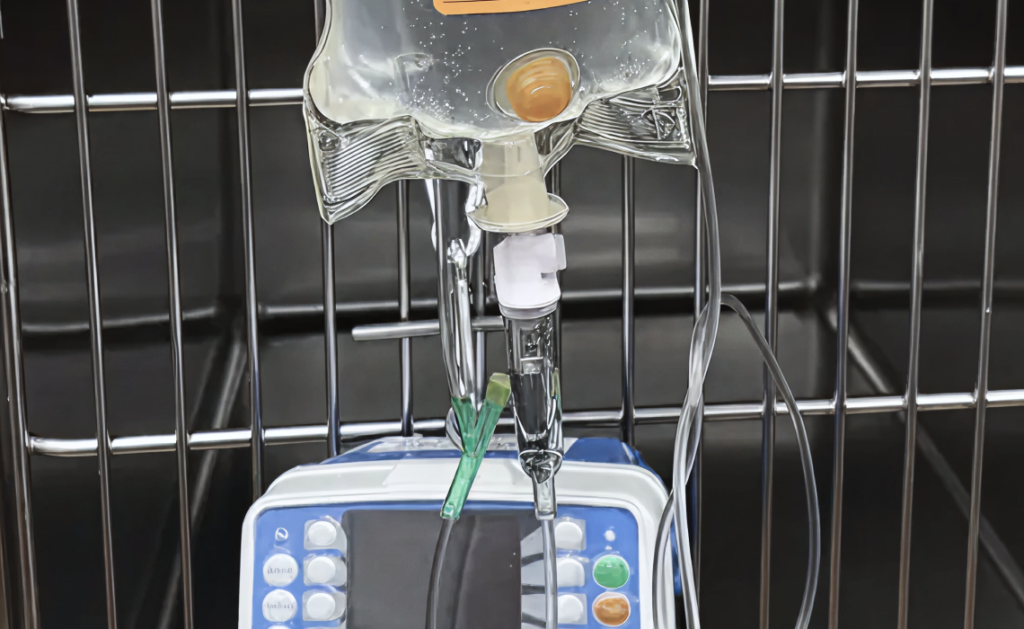
Intravenous (IV) fluid therapy is a cornerstone of veterinary medicine, and is a topic that every veterinary professional needs to be well versed in. Appropriately managing a patient’s IV fluid therapy is crucial for helping ensure their recovery and overall well-being.
IV fluid therapy involves administering a fluid directly into a patient’s vein in order to help manage the patient’s fluid requirements; helping restore fluid losses and helping maintain fluid balance. It helps prevent and treat hypovolemia, dehydration, electrolyte derangements, glucose derangements, as well as acid-base imbalances. Not only is it important to use the appropriate fluid rate for a patient, but also to use the appropriate fluid type.
The variation in composition of fluid type helps ensure that a patient is receiving the appropriate electrolyte and dextrose supplementation, acid-base balance, osmolarity, as well as fluid distribution into the appropriate body fluid compartments (e.g. intravascular, interstitial, and/or intracellular fluid compartments).
It is also crucial to administer the appropriate volume of fluids, taking any comorbidities into consideration, ensuring that a patient’s fluid rate will not result in fluid deficit or fluid overload. Do not administer too little or too much, as both can result in deleterious outcomes.
Fluid overload is life-threatening! Patients with comorbidities such as cardiac or renal disease, and cats, are at an increased risk for fluid overload. Always have these types of discussions with the patient’s owner, allowing all parties involved to be on the same page concerning any potential risks of IV fluid therapy.
Common benefits
- correcting hypovolemia (e.g. hypovolemic shock), helping restore intravascular fluid volume
- correcting dehydration, helping restore interstitial and/or intracellular fluid volume
- replacing ongoing fluid losses
- providing maintenance fluid
- correcting electrolyte derangements
- correcting glucose derangements
- correcting osmotic imbalances
- correcting acid-base imbalances
Important to remember
- always tailor IV fluid therapy to the individual patient’s needs
- fluid therapy guidelines are ever evolving
- fluids are drugs and therefore come with risks
- avoid adverse effects (e.g. electrolyte derangements or fluid overload)
- continuously monitor patients while on IV fluid therapy, and adjust the IV fluid therapy plan as needed
Key monitoring parameters
- mentation
- temperature
- heart rate
- respiratory rate
- mucous membrane palpation and color
- capillary refill time
- skin turgor
- blood pressure
- electrolytes
- glucose
- acid-base balance
- creatinine
- blood urea nitrogen
- packed cell volume/total protein
- urine specific gravity
- fluid ins and outs
- body weight
Fluid overload clinical signs
- polyuria in the absence of renal impairment or diuretic administration
- gaining unintended weight
- edema (e.g. subcutaneous, pulmonary)
- shivering
- restlessness
- pulmonary crackles
- tachypnea
- cough
- labored breathing
- chemosis
- clear nasal discharge
It is imperative to monitor patients regularly while on IV fluid therapy, especially patients on high fluid rates and/or patients with comorbidities such as cardiac or renal disease, and cats.
References:
- Pardo M, Spencer E, Odunayo A, et al. 2024 AAHA Fluid Therapy Guidelines for Dogs and Cats. J Am Anim Hosp Assoc 2024 Jul 1:60(4):131-163
- Davis H, Jensen T, Johnson A, et al. 2013 AAHA/AAFP Fluid Therapy Guidelines for Dogs and Cats. J Am Anim Hosp Assoc 2013 May-Jun;49(3):149-59
- Langston C, Gordon D. Effects of IV Fluids in Dogs and Cats with Kidney Failure. Front Vet Sci 2021;8:659960. Published 2021 Apr 20.
- Silva C, Pedro M. Intravenous fluid therapy: essential components and key considerations. Porto Biomedical Journal 10(4):e296, July/August 2025
- Dr. Danelia de Kock’s Veterinary School notes
Read Part 2 of our series: A Comprehensive Guide to Understanding IV Fluid Therapy in Dogs and Cats, Part 2: What is the Distribution of Water and Solutes within the Body?