



Introduction
Blood pressure in dogs and cats is one of the most telling indicators of cardiovascular health, and one of the most actionable. Yet in a busy clinical environment, it is easy to treat blood pressure measurement as a routine checkbox rather than the dynamic, patient-specific data point it is.
For veterinary technicians, particularly when working with cardiac patients, understanding what drives blood pressure to dangerous extremes in either direction, or what to do about it, are skills that translate directly into better patient outcomes.
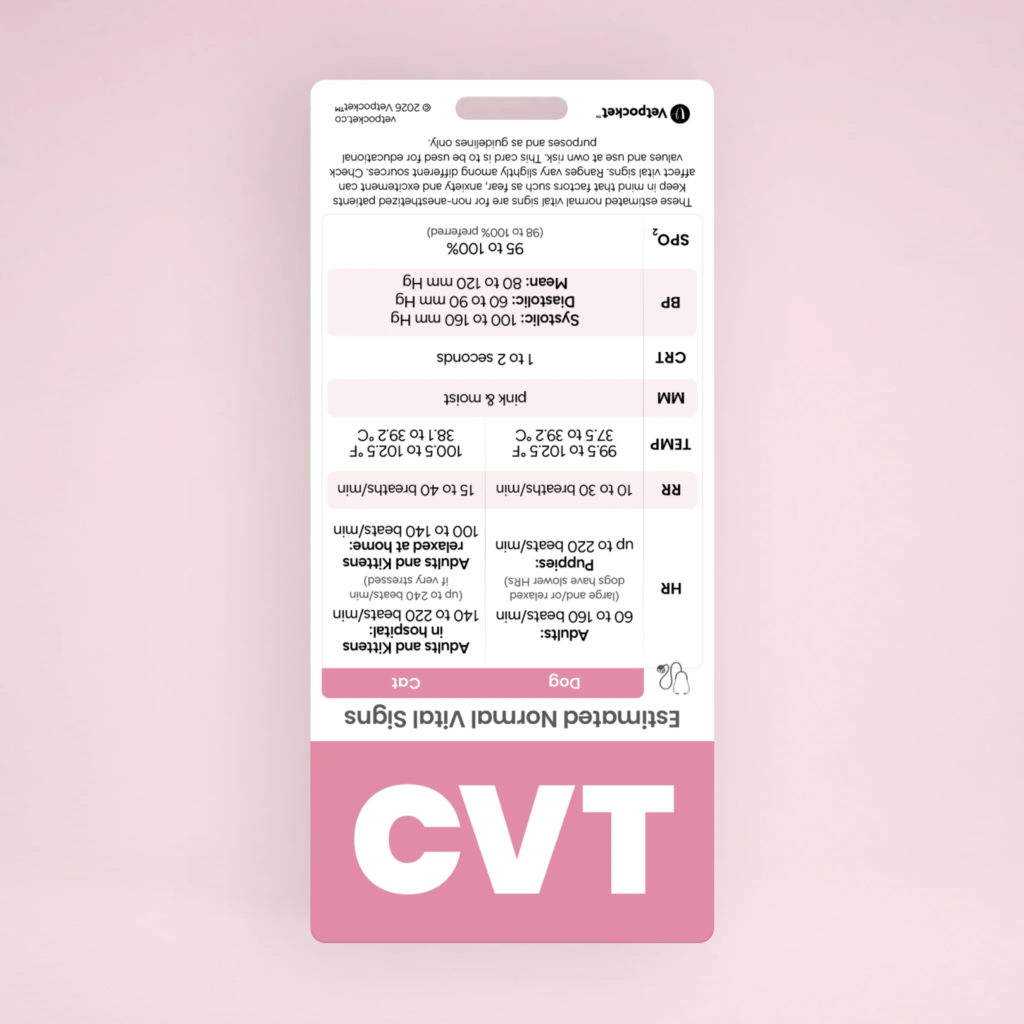
Provided within this article are reference ranges for blood pressure in dogs and cats. Please keep in mind that these values are estimates, may differ slightly depending on the source, and are to be used as guidelines. Factors such as excitement and stress – particularly in a hospital setting – can influence readings and should be considered during interpretation.
Part One: Hypertension in Dogs and Cats
Recognition and Clinical Signs
Systemic hypertension is defined as a sustained, abnormally elevated arterial blood pressure.
Hypertension staging guidelines published by the American College of Veterinary Internal Medicine, and updated in 2018, classify hypertension in dogs and cats based on the risk of target organ damage (TOD):1
- Normotensive (minimal TOD risk):
- systolic arterial blood pressure < 140 mm Hg
- Prehypertensive (low TOD risk):
- systolic arterial blood pressure 140 to 159 mm Hg
- Hypertensive (moderate TOD risk):
- systolic arterial blood pressure 160 to 179 mm Hg
- Severely hypertensive (high TOD risk):
- systolic arterial blood pressure > 179 mm Hg
These thresholds give veterinary technicians a consistent framework for helping interpret blood pressure in dogs and cats at every stage of disease.
Patients in the severely hypertensive classification require prompt antihypertensive therapy in order to prevent and/or treat end-organ damage.
In dogs and cats, hypertension is almost always secondary to an underlying disease, most commonly chronic kidney disease in dogs and cats, hyperthyroidism in cats, or hyperadrenocorticism in dogs, rather than a primary cardiovascular condition.1 Because it develops gradually and without obvious early signs, hypertension often goes undetected until end-organ damage has already occurred.
The organs most vulnerable are the eyes, brain, kidneys, and heart. Ocular changes such as retinal detachment, vitreal hemorrhage, or sudden vision loss are frequently the presenting complaint, typically appearing when systolic arterial blood pressures have exceeded 200 mmHg.2 Neurological signs such as seizures or sudden ataxia can follow cerebrovascular injury at similarly elevated pressures. Cardiac consequences are more insidious: chronic pressure overload drives concentric ventricular hypertrophy, which may present on auscultation as a gallop rhythm.
By the time an owner notices something is wrong, significant damage may already be established. Therefore, identifying this silent threat at an early stage is critical. Proactive screening in at-risk populations like older patients, those with known renal disease or hyperthyroidism, and patients on vasoactive medications is one of the most impactful preventive measures a technician can advocate for and perform.
Note that during general anesthesia, per the American Animal Hospital Association (AAHA), hypertension is defined as systolic arterial blood pressure greater than 160 to 180 mm Hg and mean arterial blood pressure greater than 120 to 140 mm Hg.3
Pharmacological and Supportive Management
Managing blood pressure in dogs and cats, pharmacologically, differs by species.
In dogs, ACE inhibitors such as enalapril or benazepril are generally the first-line choice, offering antihypertensive benefit alongside renal and cardiac protective effects through renin-angiotensin-aldosterone system (RAAS) blockade.4
In cats, amlodipine besylate, a dihydropyridine calcium channel blocker is the established first-line antihypertensive. Its selective arterial vasodilation and minimal effect on heart rate make it well tolerated in most feline patients, including those with concurrent cardiac disease.5
For both species, a recheck blood pressure assessment within one to three days of starting therapy is recommended for high-risk patients, with a follow-up at one to two weeks until pressures are stabilized. Renal values and electrolytes should be rechecked within that same window, as changes in systemic blood pressure can affect renal perfusion.
Part Two: Hypotension in Dogs and Cats
Recognition and Clinical Signs
Hypotension is defined as an abnormally low arterial blood pressure.
Hypotension in dogs and cats is broadly defined as systolic arterial blood pressure below 90 mm Hg and mean arterial blood pressure below 70 mm Hg, with mean arterial blood pressure below 60 mm Hg being considered a critical threshold. Hypotension refers to a state in which blood pressure drops low enough that it compromises perfusion, and therefore oxygen and nutrient delivery, to tissues and organs such as the brain, kidneys, and heart, and can deteriorate rapidly if not identified and treated early.
Unlike hypertension, its signs are often apparent on physical examination before a cuff is applied. Affected patients typically present with lethargy and weakness. Mucous membranes may appear pale or muddy with a capillary refill time exceeding two seconds, and palpation of the femoral artery may reveal weak, hypokinetic pulses reflecting a narrow pulse pressure.6 A patient that was ambulatory at the previous visit and presents now as dull or reluctant to move warrants a blood pressure measurement promptly.
Oscillometric devices are unreliable in hypotensive states due to insufficient pulse signal amplitude. The Doppler method is preferred, as it retains accuracy even at very low systolic pressures.7 In hospitalized critical patients, central venous pressure (CVP) measurement can help assess volume status directly; a CVP below 0 cmH₂O is consistent with hypovolemia.
Note that during general anesthesia, hypotension can be a common complication, and per the American Animal Hospital Association (AAHA), it is defined as systolic arterial blood pressure below 80 to 90 mm Hg, mean arterial blood pressure below 60 to 70 mm Hg, and diastolic arterial blood pressure below 40 mm Hg.3
Pharmacological and Supportive Management
Identifying the cause of hypotension before initiating treatment is essential, as the approach varies significantly. Hypovolemia or acute blood loss calls for intravenous fluid therapy to restore preload and perfusion pressure. When hypotension stems from poor myocardial contractility, as in dilated cardiomyopathy or end-stage myocardial failure, positive inotropic support with dobutamine or dopamine administered as a constant rate infusion is the standard intervention.8
Cardiac tamponade is a critical exception. When pericardial fluid prevents adequate ventricular filling, the resulting hypotension can mimic volume depletion. But diuretics are contraindicated, as they further reduce an already-compromised preload. These patients require intravenous fluid therapy to temporize and urgent pericardiocentesis to relieve the obstructive pressure.9 Muffled heart sounds, jugular venous distension, and pulsus paradoxus are the clinical hallmarks; recognizing this triad quickly can be lifesaving.
A meaningful proportion of hypotension in cardiac patients is iatrogenic; furosemide, angiotensin-converting enzyme (ACE) inhibitors, amlodipine, and pimobendan all reduce blood pressure, and their combined effect in a polypharmacy patient can be additive. When a patient on multiple cardiac medications presents with compatible signs, reviewing recent drug changes is essential before attributing the episode to disease progression alone. Doses may need to be temporarily withheld or reduced until pressure stabilizes, and owners should be counseled at dispensing to watch for lethargy and weakness at home as early warning signs.10
Measuring Blood Pressure in Dogs and Cats Accurately
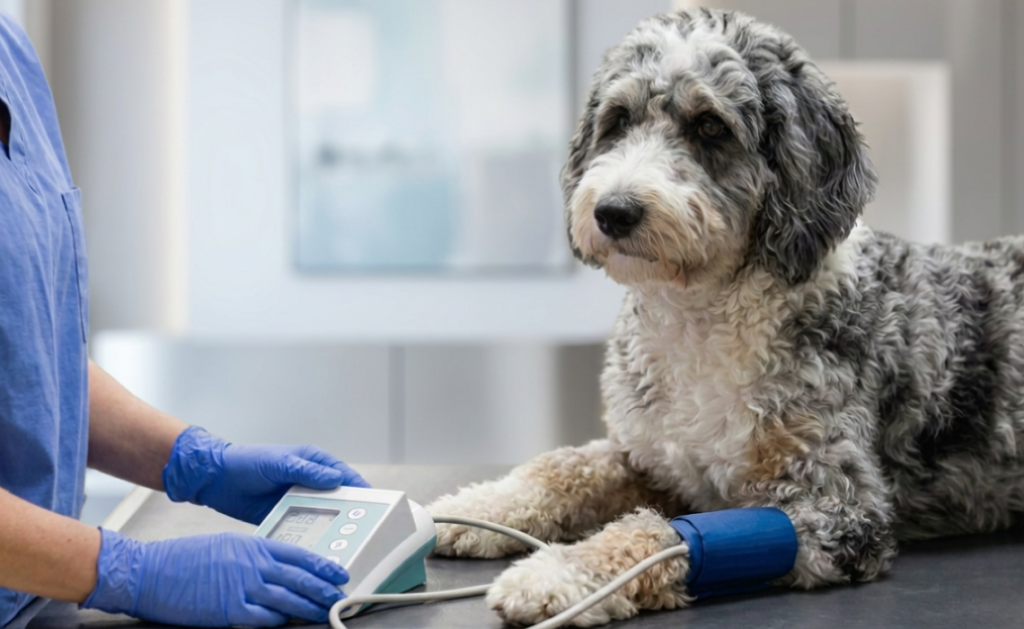
Accurately measuring blood pressure in dogs and cats depends heavily on technique and method selection.
Doppler flow detection is widely regarded as the preferred approach for awake patients. An ultrasound crystal placed over a peripheral artery detects the return of blood flow as a cuff is slowly deflated, with the first audible pulse corresponding to systolic pressure. It is particularly reliable in cats and in hypotensive patients where low pulse pressure limits other methods.7
Oscillometric systems offer hands-free convenience and are well suited to anesthetized patients, though their accuracy is limited in small patients especially cats, and in those with irregular rhythms or low perfusion states.
High-definition oscillometry (HDO) is a newer advancement validated specifically for small animals; its graphical representation of pulse oscillations helps exclude motion-related artifacts and improve reliability in the clinical setting.11
Cuff selection is critical regardless of method. For dogs, cuff width should be approximately 40% of limb circumference; for cats, 30% is more appropriate due to the smaller diameter of their distal vessels.12 A cuff that is too narrow will falsely elevate readings, while one that is too wide will underestimate pressure; the former error being the more clinically dangerous of the two. Getting cuff selection right is one of the simplest ways to keep blood pressure in dogs and cats measured accurately and consistently.
The “white-coat effect” or stress-induced blood pressure elevation is a consistent confounder. At least five consecutive, repeatable readings should be obtained after the patient has had adequate time to settle, and the values averaged. Single readings from a newly arrived or anxious patient are rarely representative of true resting pressure.
The Veterinary Technician at the Center of Blood Pressure Management
Veterinary technicians perform the measurements, administer the medications, monitor hospitalized patients, and communicate with owners in ways that directly shape how well therapeutic plans are followed. Consistent techniques such as correct cuff sizing for the species, appropriate patient positioning, adequate acclimatization, and a standard number of readings helps produce data the veterinarian can rely on to make sound prescribing decisions.
Every technique described here exists to produce one thing: a trustworthy reading of blood pressure in dogs and cats that the veterinarian can act on.
Client education is equally consequential; an owner who understands why their cat takes amlodipine daily, what a hypertension-related retinal detachment means, or what early signs of hypotension to watch for at home, is far more likely to be a reliable partner in long-term management. Explaining why blood pressure in dogs and cats needs regular rechecks, not just a one-time reading, helps owners stay engaged in long-term management.
A Spectrum Worth Mastering
Blood pressure in dogs and cats sits at the center of nearly every cardiac workup, which is exactly why it deserves more attention than a quick cuff reading.
Blood pressure abnormalities in dogs and cats are common, consequential, and highly manageable when identified and treated appropriately. For the veterinary technician, the question worth asking at every cardiac appointment is not just “what is the number?” but “what does this number mean for this patient, on these drugs, at this stage of disease?” Developing that clinical fluency is what separates a technician who takes blood pressures from one who truly manages them.
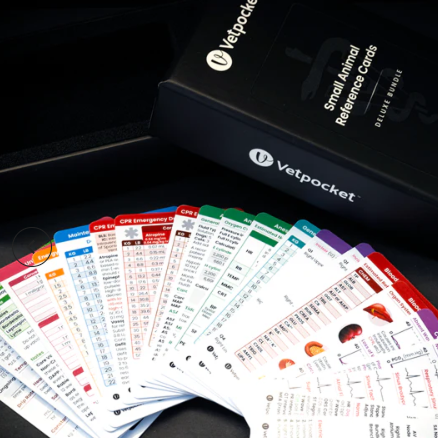
Quick References at Your Fingertips
[Ad by Vetpocket] You can also find blood pressure in dogs and cats on Vetpocket’s Designation Badges.
References
1 Acierno M, Brown S, Atkins C, Coleman A, et al. “ACVIM consensus statement: Guidelines for the identification, evaluation, and management of systemic hypertension in dogs and cats.” Journal of Veterinary Internal Medicine. 2018;32(6):1803–1822.
2 Maggio F, DeFrancesco TC, Atkins CE, et al. “Ocular lesions associated with systemic hypertension in cats: 69 cases (1985–1998).” Journal of the American Veterinary Medical Association. 2000;217(5):695–702.
3 Grubb T, Sager J, Gaynor JS, et. al. 2020 AAHA Anesthesia and Monitoring Guidelines for Dogs and Cats. J Am Anim Hosp Assoc. 2020 Mar/Apr;56(2):59-82.
4 Atkins C, Bonagura J, Ettinger S, et al. “Guidelines for the diagnosis and treatment of canine chronic valvular heart disease.” Journal of Veterinary Internal Medicine. 2009;23(6):1142–1150.
5 Snyder PS. “Amlodipine: a randomized, blinded clinical trial in 9 cats with systemic hypertension.” Journal of Veterinary Internal Medicine. 1998;12(3):157–162.
6 Silverstein DC, Hopper K, eds. Small Animal Critical Care Medicine. 2nd ed. Elsevier Saunders; 2015.
7 Stepien RL. “Feline systemic hypertension: diagnosis and management.” Journal of Feline Medicine and Surgery. 2011;13(1):35–43.
8 Plumb DC. Plumb’s Veterinary Drug Handbook. 9th ed. Wiley-Blackwell; 2018.
9 Rush JE. “Cardiac tamponade.” In: Bonagura JD, Twedt DC, eds. Kirk’s Current Veterinary Therapy XV. Elsevier; 2014.
10 Atkins CE, Häggström J. “Pharmacological management of myxomatous mitral valve disease in dogs.” Journal of Veterinary Cardiology. 2012;14(1):165–184.
11 Martel E, Egner B, Brown SA, et al. “Comparison of high-definition oscillometry — a non-invasive technology for arterial blood pressure measurement — with a direct invasive method using radio-telemetry in awake healthy cats.” Journal of Feline Medicine and Surgery. 2013;15(12):1104–1113.
12 Durham HE. “Arterial blood pressure measurement.” Veterinary Technician. 2005;26:324–339.