



Meet Penny and Ms Smith
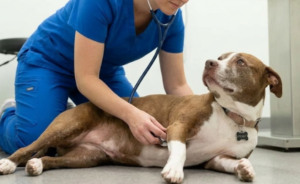
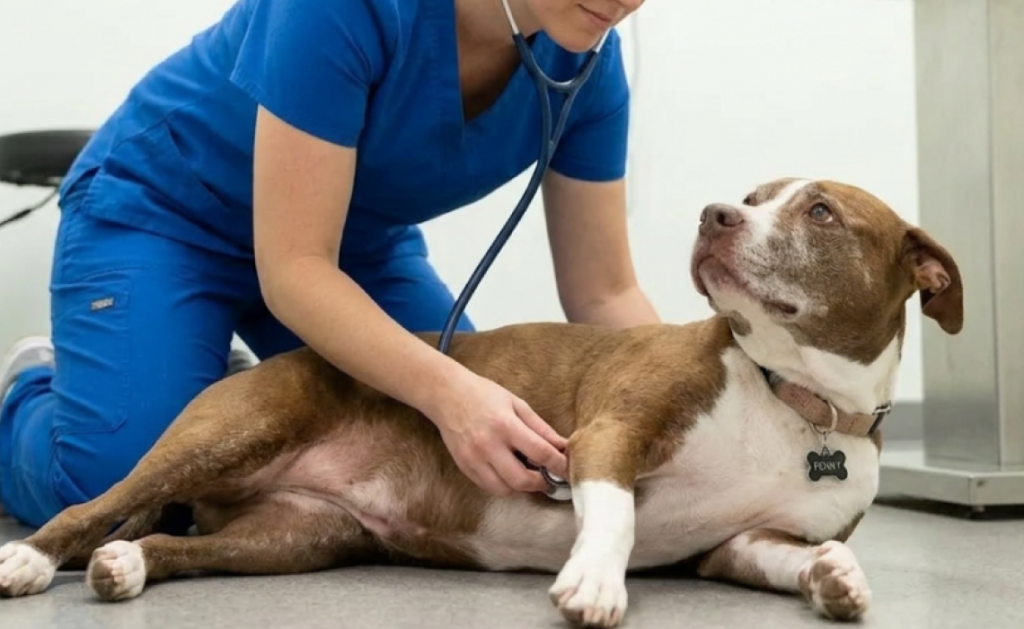
Ms Smith owns Penny, an 8 year old female intact Pit Bull. You haven’t seen Penny in 4 years nor has another veterinarian. You see that Penny has been lethargic and vomiting and immediately start your differential list.
You also start to make assumptions based on the lack of previous care and heave an inward sigh. Ms Smith was always difficult and declined everything you recommended. You expect today to be no different.
Your trusted technician looks towards you and rolls her eyes, silently conveying a mutual feeling of frustration.
Implicit Bias
This scenario might sound exaggerated, but I’ve done (and seen) this myriad times. We are trained experts in medicine; we spend years readying ourselves to offer the best care to pets, and when that care is not given, we feel frustrated.
This is why implicit bias matters. The sigh and the eye roll immediately set a tone for the appointment, from the front staff to the treatment area.
Keep Practicing
So LOOK, here’s what you’re going to do.
You’re going to walk into the room and do a thorough head-to-tail exam.
After your exam, you’ll make recommendations. Based on the findings of your physical exam (PE), this might include diagnostics like bloodwork and x-rays, or perhaps just symptomatic therapy.
Your technician or client service representative (CSR) may present an estimate.
The Dream of Veterinary Medicine
The owner will agree to everything you recommend, and everything proceeds from point A to point B smoothly. At the end of the appointment, payment is made, and most importantly, the owner is impressed with your kindness and the efficiency and capabilities of your staff, and Penny got the care she needed. Everyone is happy.
This is our dream of veterinary medicine, and this is why most of us became vets – to heal animals.
The Reality of Veterinary Medicine
The limitations only become obvious when you enter the real world of finances, with its attendant inflation and affordability crisis.
So how do you handle this? How do you help the patient and the owner best?
First, recognize the bias. Then set it aside. You don’t have to ignore it or pretend it’s not there. But you can acknowledge “I don’t have a great feeling about this, but feelings aren’t facts.” And then decide to act with kindness and empathy and make the best recommendations.
That starts with a good PE, nose-to-tail. Personally, I tend to narrate my PE. This is helpful for a couple of reasons. Artificial Intelligence (AI) record generation is rapidly becoming the norm in our field. But more importantly, it adds value and understanding to the owner’s experience. When they understand what we’re evaluating and why, lines of communication are clearer.
Physical Exam Findings
On your PE, you find the expected fever, abdominal pain, and vaginal discharge. A pyometra is your current top differential, although other possibilities do exist.
You discuss this with the owner and offer diagnostics to include bloodwork, x-rays, and a brief abdominal ultrasound.
Financial Limitations
The owner has very limited finances, and she is immediately up front about this.
And here, we arrive at one of the cruxes in veterinary medicine.
Money. It always seems to come back to money.
And as veterinarians, we often shoulder the guilt of this. We want to heal, to do what our education taught us to do, without regard for cost or convenience. And often, many things stand in our way. Money is usually the big one.
Remember: Offer the same kindness. Offer the same options. Accept different paths.
It is not up to us to carry an owner’s financial limitations nor their stories of struggle and heartache. We can care without carrying. We can set those things down at the end of the day when we have offered our best, done our best, and extended kindness.
In this case, I will talk to the owner about my specific concerns for Penny. I explain what I find on my PE, my concerns for a pyometra, my other potential differentials, and the next steps in her diagnosis.
It’s easy to cut corners because you know the owner doesn’t have financial resources. But we offer the same options regardless.
We may couch those options in gentle terms such as “I know that finances are a concern, so let’s talk through all the options, and you can tell me what will work best for you and Penny” or “what is feasible for you today, emotionally and financially?”
Pyometra Diagnostics
With a suspected pyometra, the usual approach in a general practice (GP) setting is baseline bloodwork (complete blood count (CBC), chemistry (CHEM) panel, and electrolytes), a urinalysis, abdominal x-rays, and a brief abdominal scan to evaluate for uteromegaly. Cost can range from several hundred to over $1,000 in the United States.
Ms Smith has about $800 to work with today, and she wants to do the best thing she can for Penny.
Now what?
Stay tuned for part 3.
Read Part 1 of our series: Dear New Grad: A Series; The Art of Veterinary Medicine (Part 1 of 8).