
Surgical Scissors Guide: Types, Uses & Suture Kit Essentials
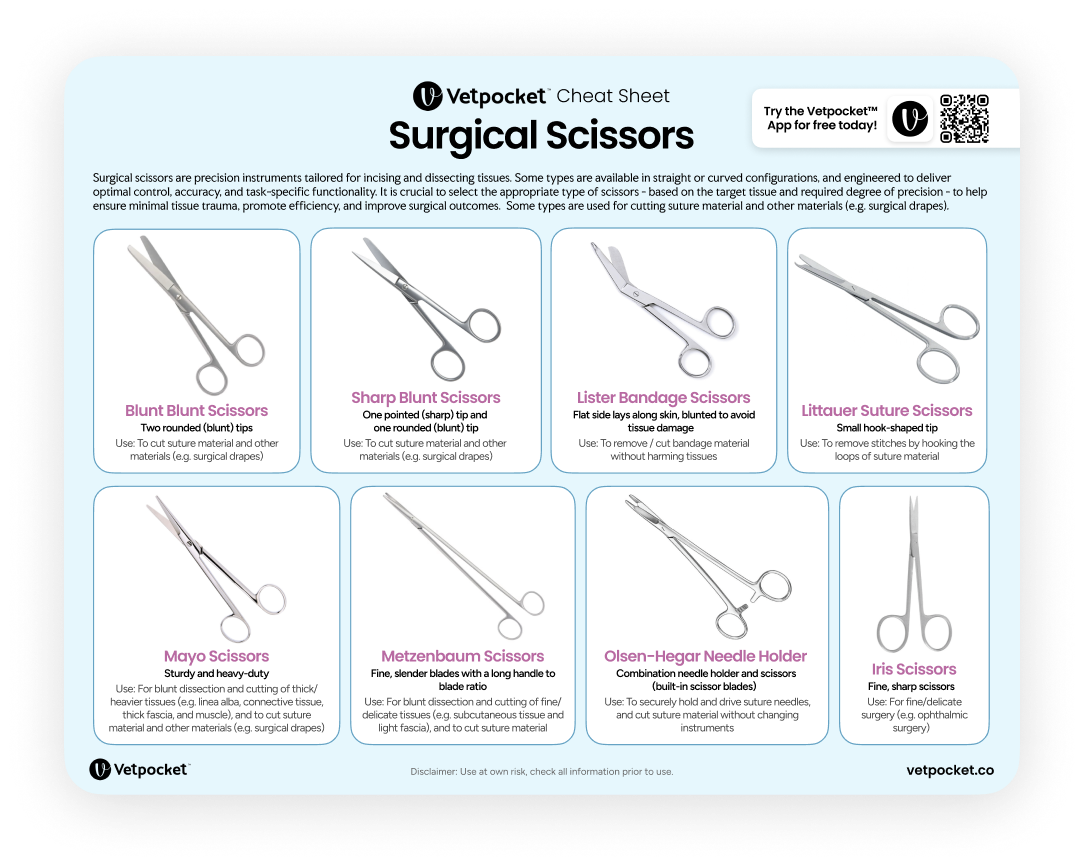
Surgical scissors are precision instruments used to cut tissue, divide suture material, perform blunt dissection and prepare surgical or bandage materials. Although many scissors look similar at first glance, differences in blade shape, tip design and instrument weight make each pattern better suited to a particular task.
Knowing which surgical scissors to select can help minimise tissue trauma, protect delicate instruments and make procedures more efficient. This quick-reference guide covers the common scissors found in a veterinary surgical suture kit, including Mayo, Metzenbaum, Littauer, Lister and iris scissors.
Why Choosing the Right Surgical Scissors Matters
Surgical scissors are designed for specific tissues and materials. A heavy pair of Mayo scissors can handle fascia or muscle, while fine Metzenbaum scissors provide greater control when dissecting delicate tissue. Using a heavy instrument on fragile tissue may cause unnecessary trauma, while using delicate scissors on thick material can damage or dull the blades.
The tip configuration is also important:
- Blunt-blunt scissors have two rounded tips for working near tissue with a reduced risk of accidental puncture.
- Sharp-blunt scissors combine one pointed tip with one rounded tip, providing both precision and protection.
- Curved scissors can improve visibility and access when working deeper within a surgical site.
- Straight scissors provide useful control when cutting accessible tissue, sutures or materials.
Always select the instrument according to the tissue, material and level of precision required.